

Home > Copper Nickel > Copper Nickel Forging
Embark on a journey of excellent performance and reliability with our Nickel Alloy Forgings, carefully custom-built to excel in the most rigorous industrial environments. Engineered with precision and fortified with exceptional durability, our nickel alloy forgings redefine excellence in critical applications. Offering unmatched resistance to corrosion and enduring strength, our forgings surpass traditional alternatives, ensuring steadfast performance where others may falter. From high-pressure applications in oil and gas exploration to extreme temperatures in power generation, our extensive range of Nickel Alloy Forgings promises unmatched resilience and consistent functionality. Committed to exceeding customer expectations, we deliver tailored solutions, competitive pricing, and prompt service, ensuring seamless integration into your projects with utmost precision and efficiency. Trust in our premium-grade forgings, backed by a steadfast commitment to quality and performance, to elevate your ventures to new heights of success.
| Specifications | ASTM B564, ASME SB564 |
|---|---|
| Standard | DIN, ASTM, BS and all International Standards |
| Flat bar blocks | up to 27″ width and 15,000 lbs |
| Cylinders and sleeves | up to 50″ maximum O.D. and 65″ maximum length |
| Discs and hubs | up to 50″ diameter and 20,000 lbs |
| Rolled, hand forged or mandrel forged rings | up to 84″ maximum O.D. and 40″ maximum length |
| Rounds, shafts and step shafts | up to 144″ maximum length and 20,000 lbs |
At PipingMart, we take pride in being the largest supplier and manufacturer in the UAE, offering cutting-edge solutions for all your piping needs. With state-of-the-art production plants strategically located in the UAE, we boast a vast inventory of over 25,000 tons of premium-quality materials readily available in stock.
Contact us to get a quick quote for your requirement.
We offer These Copper Nickel Forging as per DIN, ISO, JIS or ANSI Standard.
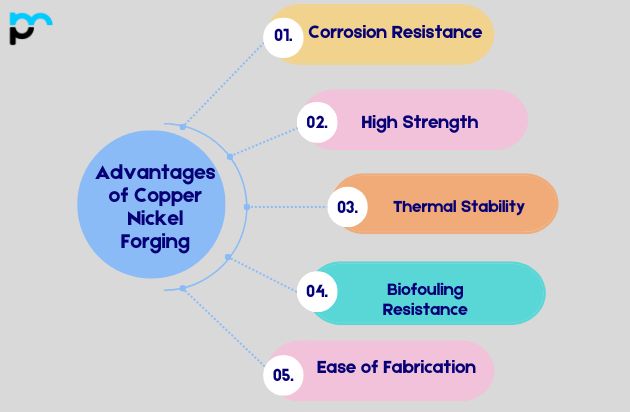
Corrosion Resistance: Copper nickel alloys are highly resistant to corrosion in seawater and various aggressive environments. This makes them ideal for marine applications, offshore structures, and in industries where resistance to corrosion is critical.
High Strength: Copper nickel alloys exhibit good mechanical properties, including high strength and toughness. This makes them suitable for components subjected to high stress and mechanical loads.
Thermal Stability: They have good thermal stability, retaining their properties at both high and low temperatures. This makes copper nickel forgings reliable in a wide range of operating conditions.
Biofouling Resistance: These alloys are resistant to biofouling, which is the accumulation of microorganisms, plants, algae, or small animals on wetted surfaces. This property is beneficial in marine applications.
Ease of Fabrication: Copper nickel alloys are ductile and easily fabricated into complex shapes, including through forging. This allows manufacturers to produce intricate parts and components efficiently.
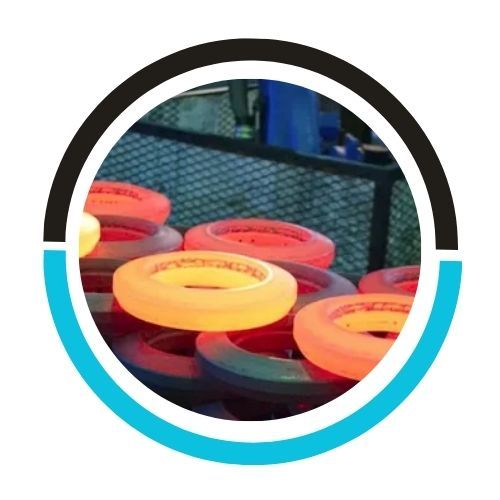

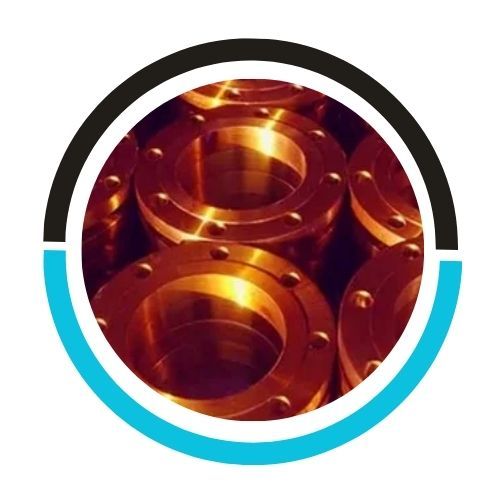
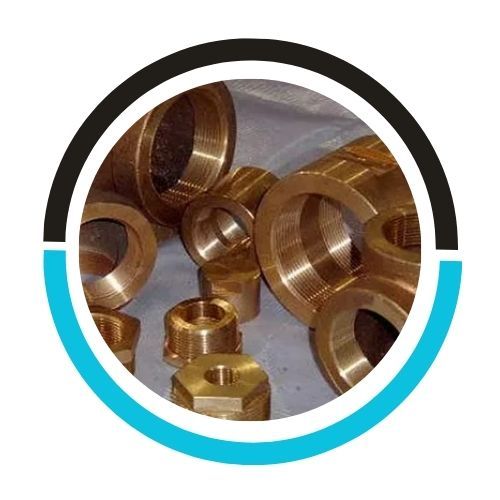
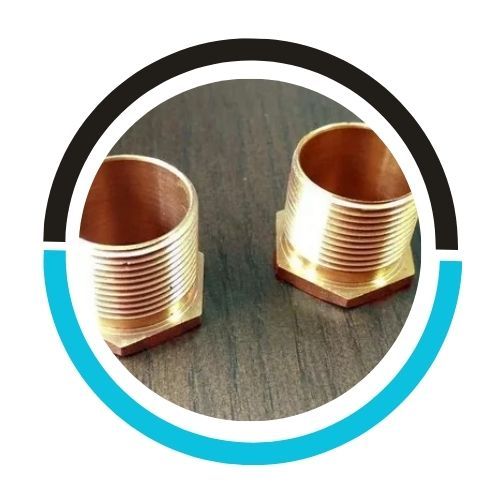
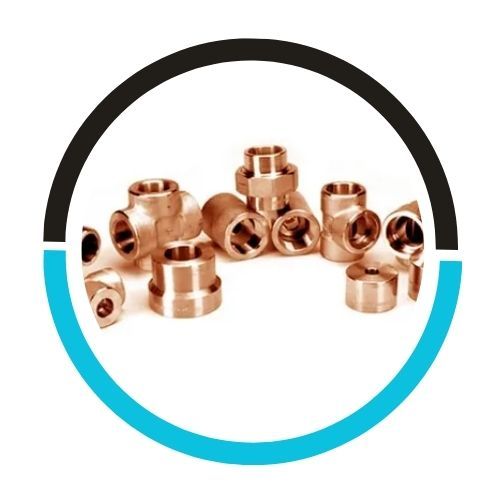
Copper Nickel Forging applications are as diverse as the industries they serve driven primarily by the aerospace, railway, construction and automotive industries with petrochemical, nuclear, medical, Oil & Gas, Chemical, Pharmaceutical, Food & Beverage, Nuclear, Thermal Power plants, Paper and Pulp, marine and mining, etc.
Marine Applications: Copper nickel alloys (such as 90/10 and 70/30 compositions) are extensively used in marine environments for components like ship hulls, offshore platforms, and seawater piping systems. Their resistance to seawater corrosion and biofouling makes them ideal for these applications.
Power Generation: In the power generation industry, copper nickel forgings are used in components such as heat exchangers, condensers, and piping systems. Their excellent thermal conductivity and resistance to corrosion in both fresh and saltwater environments are advantageous here.
Chemical Processing: Copper nickel alloys find use in chemical processing equipment where resistance to corrosion by acids, alkalis, and other chemicals is crucial. They are used in valves, pumps, heat exchangers, and various chemical plant components.
Composition: Copper nickel alloys come in different compositions, such as 90/10 (90% copper, 10% nickel) and 70/30 (70% copper, 30% nickel), among others. The composition determines properties like corrosion resistance, mechanical strength, and cost. Choose the composition that best suits the environmental conditions and performance requirements of your application.
Corrosion Resistance: Assess the level of corrosion resistance required for your application. Copper nickel alloys generally offer excellent resistance to seawater, brackish water, and various chemicals. Consider factors like exposure to marine environments, chemical processing, or industrial atmospheres.
Mechanical Properties: Evaluate the mechanical properties needed, such as strength, ductility, and toughness. The mechanical properties of copper nickel alloys can vary based on composition and heat treatment. Ensure the alloy’s strength and toughness meet the operational demands of your components.
Yes, copper nickel forgings can be recycled after use. The alloys are highly recyclable due to their valuable copper and nickel content. Recycling helps conserve natural resources, reduces energy consumption compared to primary production, and supports sustainable practices in various industries.
Yes, copper nickel forgings are suitable for hygienic and sanitary applications. They offer excellent corrosion resistance, which is crucial for maintaining cleanliness in food processing, pharmaceutical, and healthcare environments. Their antimicrobial properties further enhance their suitability for applications requiring high standards of hygiene.
Yes, copper nickel forgings can be susceptible to galvanic corrosion when in contact with dissimilar metals, especially in conductive environments. To minimize this risk, ensure proper material selection and use appropriate insulating techniques, such as non-metallic spacers or coatings, to prevent galvanic coupling and protect the integrity of the alloy.
Yes, copper nickel forgings can be used for underground applications. Their excellent resistance to corrosion, including resistance to soil corrosion and underground water conditions, makes them suitable for underground piping systems, cables, and other components where durability and long-term performance are essential.
Call Us: +91 7208967217
Email: sales@www.vigneshmetals.com